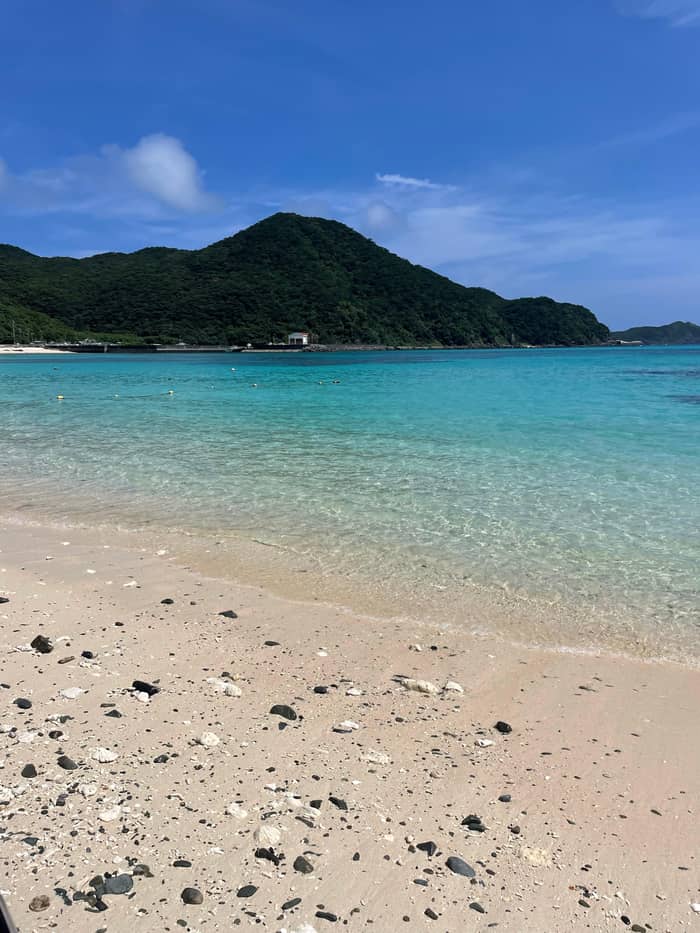
The tour of this site
Our Tokashiki day
Beach, lunch and shuttles
- Length8.5 - 9.5 hours
- Rating4.3 from 694
- Pricefrom $62
Pick-for-me guide
Tokashiki Island day trip by boat from Naha
★ 4.4 · 694 guest ratings
Summary
Zamami vs Tokashiki Island comes down to crossing and beach: Tokashiki is 40 minutes by Marine Liner and Zamami about 50 minutes by express ferry.
Size and beaches
Two taps to your boat
Say how much sea time you want and what matters on the island, and a matching listing appears with its from-price.
The right fit for you
from $62
The crossing, island shuttles and lunch are included, and the day lasts 8.5 - 9.5 hours.
The right fit for you
from $48
It is a 7-hour day with the car ferry out to Aharen Beach.
The right fit for you
from $90
It adds a banana boat to the reef and photos taken by the guide.
The right fit for you
from $83
It runs about 7 hours by high-speed boat and may visit Zamami, Tokashiki and Maejima.
Both islands are a boat ride from Naha, both have clear water and turtles, and both see whales in winter. This page lines them up so you can choose by crossing time, beaches, transport and where you sleep.
Editorial team, tokashikiislanddaytrip.com · Updated November 6, 2026 · Quick read: 6 min
In brief
For one day from Naha, Tokashiki is the simpler choice and Zamami the more spread-out one. Tokashiki is a boat ride of 40 minutes on the Marine Liner, according to the village, while Zamami is about 50 minutes by express ferry, according to Visit Okinawa Japan.1,2 Both are part of Keramashoto National Park, which Visit Okinawa Japan says is close enough to Naha for a day trip.7,8
The rest of the choice is a matter of taste. Tokashiki gives a white crescent at Aharen with bars and cafes in walking distance, and a turtle reef at Tokashiku.9,10 Zamami gives Furuzamami Beach, which runs on for over 800 meters, and sea turtles in the shallow waters near the island.4,11
Tokashiki or Zamami Island is a close call, and neither island is wrong. This site sells a Tokashiki day, so its pages lean that way, but the figures below come from the village, the Okinawa tourism bureau and the Ministry of the Environment, and they apply equally to Zamami. Read the sections that matter to you and use the quiz above to settle the tie.
Island by island
| Question | Tokashiki | Zamami |
|---|---|---|
| Express crossing | 40 minutes1 | About 50 minutes2 |
| Area | 15 square kilometers3 | 6.7 square kilometers2 |
| Main beach | Aharen, arcing and watersport-friendly9 | Furuzamami, more than 800 meters4 |
| Turtles | Aharen and Tokashiku24,10 | Shallow waters near the island11 |
| Local transport | Buses reach Aharen only5 | Local bus to Ama and Furuzamami6 |
| Where to stay | Guesthouses and a campsite25 | Minshuku, hostels and pensions26 |
Figures come from Tokashiki village and Visit Okinawa Japan; the crossing times differ by source and by boat.27
Tokashiki village runs the Marine Liner Tokashiki, which takes 40 minutes, and the car ferry, which takes 70 minutes.1,17 Visit Okinawa Japan lists the express ferry to Zamami at 50 minutes to 1 hour 10 minutes, depending on the call at Aka, and the regular ferry at 2 hours.18 The shorter crossing leaves more of a day on the beach.
Both crossings start at Tomari Port in Naha. The Zamami village ferry boards next to the Tomarin building and takes reservations from 1 month before departure.19 Tokashiki's boats can be reserved online, and the village warns that its ferries become very crowded from June to October.20,21 In both cases, book early in the summer months.
Rough seas affect both. Zamami village says schedules can change or be cancelled in rough seas and asks passengers to check for updates before the trip.22 Tokashiki village cancels the Marine Liner in waves above 3 meters and the car ferry above 4 meters.23 A package that includes the boat, such as our listing, still depends on the sea.
The calendar both islands share
Jan to Apr
Whales are in the Kerama waters from around January to April.12
Mid-Apr
The beaches list a swimming season from mid-April to November.13
Mid-May to Jun
The rainy season is typically mid-May to late June.14
Jun to Sep
Typhoons are possible from June through September.14
August
The sea reaches nearly 30 degrees Celsius and typhoons occur most often.14,15
October
The October water averages 27 degrees Celsius.16
Tokashiki is the larger island. Visit Okinawa Japan calls it the largest island in Keramashoto National Park, at 15 square kilometers.3 Zamami covers 6.7 square kilometers and has around 500 residents.2
The bureau describes Tokashiki as a leafy mountainous island whose cliffs tower over Kerama blue waters, with observation decks and the Mihanabaru Promenade.3,30,31 It describes Zamami as an island of steep, rugged hills leading down to tranquil white beaches.
In practice Tokashiki is an island of separate beach areas linked by one road, and Zamami a small island of several bays. Choose by the kind of afternoon you want: a long walk or a long swim. Our own day is built for the swim, with free time at Aharen Beach or a guided turtle session at Tokashiku Beach.
Pick a day
The tour of this site
Beach, lunch and shuttles
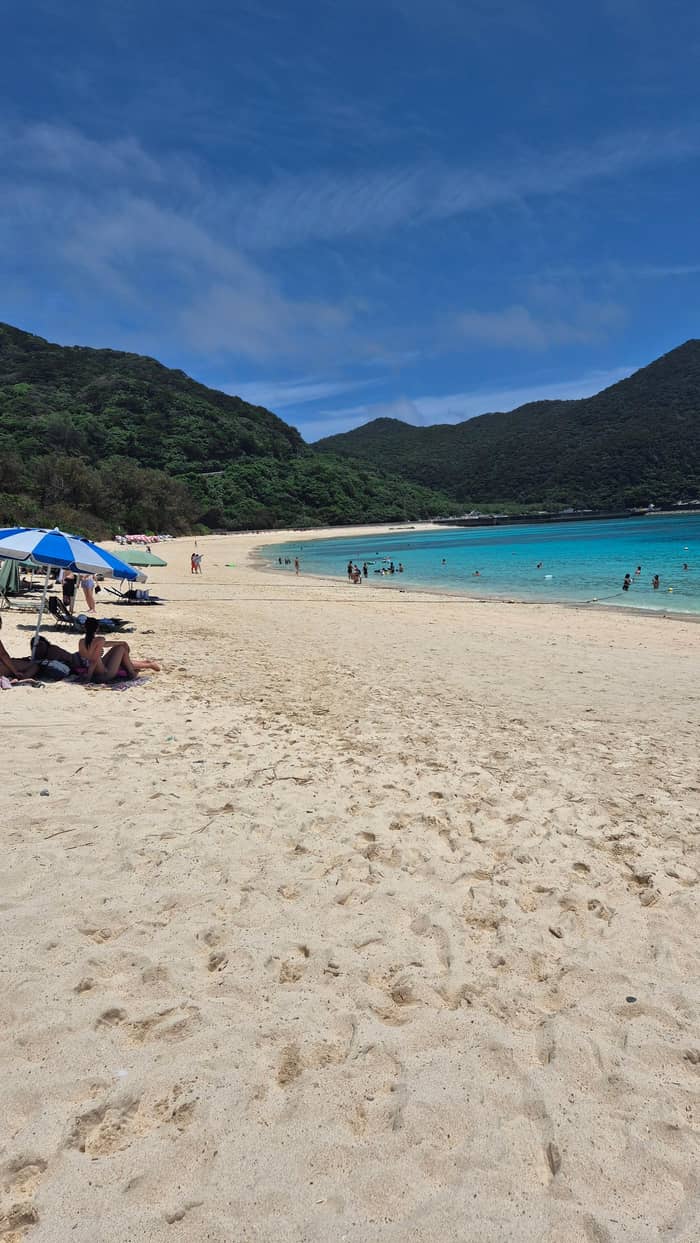
Most reviewed
Several islands by high-speed boat
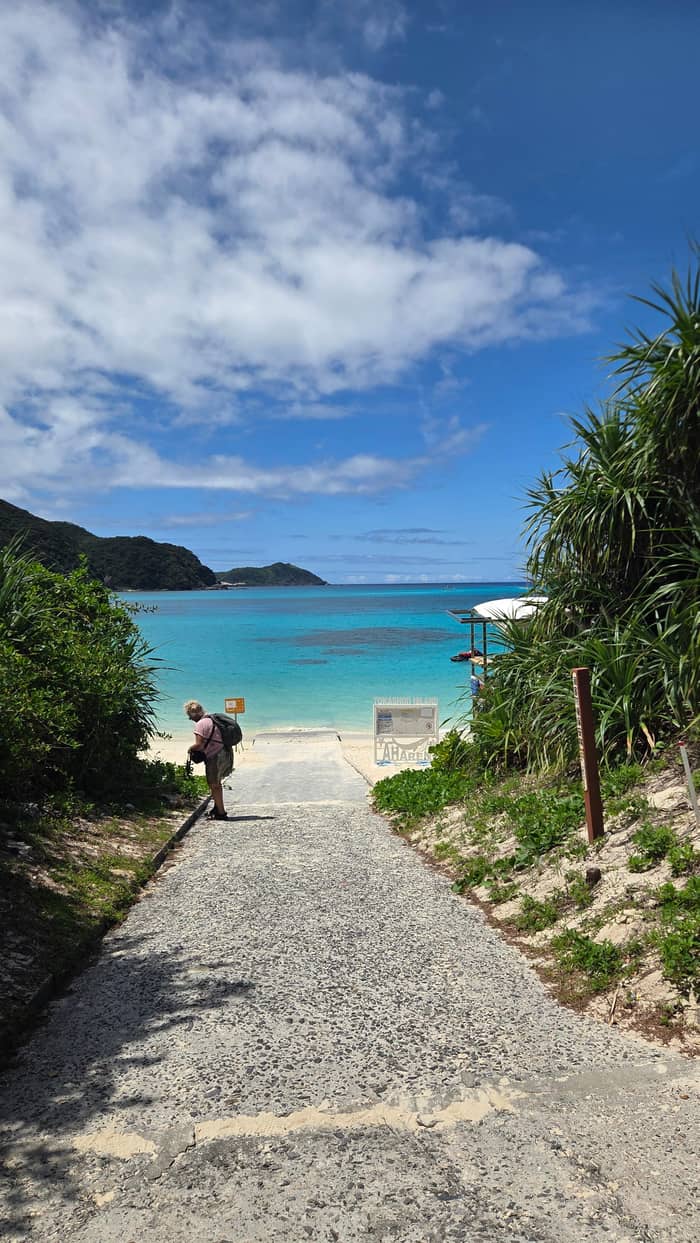
Highest rated
Snorkel points, boxed lunch
Tokashiki's main beach is Aharen, which Visit Okinawa Japan calls great for watersports and a great place to spot sea turtles.9,24 Tokashiku Beach on the west coast has a reef that is one of the best places on the island to sight a turtle.10 A kayak trip from Aharen reaches Hanari Island, some 800 meters offshore.33
Zamami's headline beach is Furuzamami, the longest on the island at more than 800 meters, with breathtaking views of the vivid blue sea.4 The bureau says you might even encounter the graceful sea turtles which frequent the shallow waters near the island.11 Ama Beach is reached by local bus.6
Both islands share the same sea, and Okinawa sea temperature runs from around 21 degrees Celsius in February to nearly 30 in August.14 The differences are in access and facilities. Tokashiki's Aharen lists lockers, showers, a shop and a campsite, and free entrance.34,13 Check the Zamami village for its own beach details before you go.
On Tokashiki the village says some buses go to Aharen beach and none go to Tokashiku beach.5 A taxi or local bus from the port to Aharen takes less than 15 minutes, and Tokashiku needs a taxi, a rental or a pick-up.9,35 The getting-around page on this site covers the details.
On Zamami Visit Okinawa Japan recommends renting a car or electric bike for moving about the hilly island, and says beach-lovers can reach Ama or Furuzamami beaches by local bus.6 The islands have different logistics: on Tokashiki you choose one beach and take transport, and on Zamami you choose a vehicle and range between bays.
If you fancy both, a small on-demand boat called Ferry Mitsushima links Aharen Fishing Port with Zamami and Aka, and it must be reserved at least 1 day ahead.36 That is for a stay and not for a day, as a single day on both islands would be mostly boats and waiting.
Video
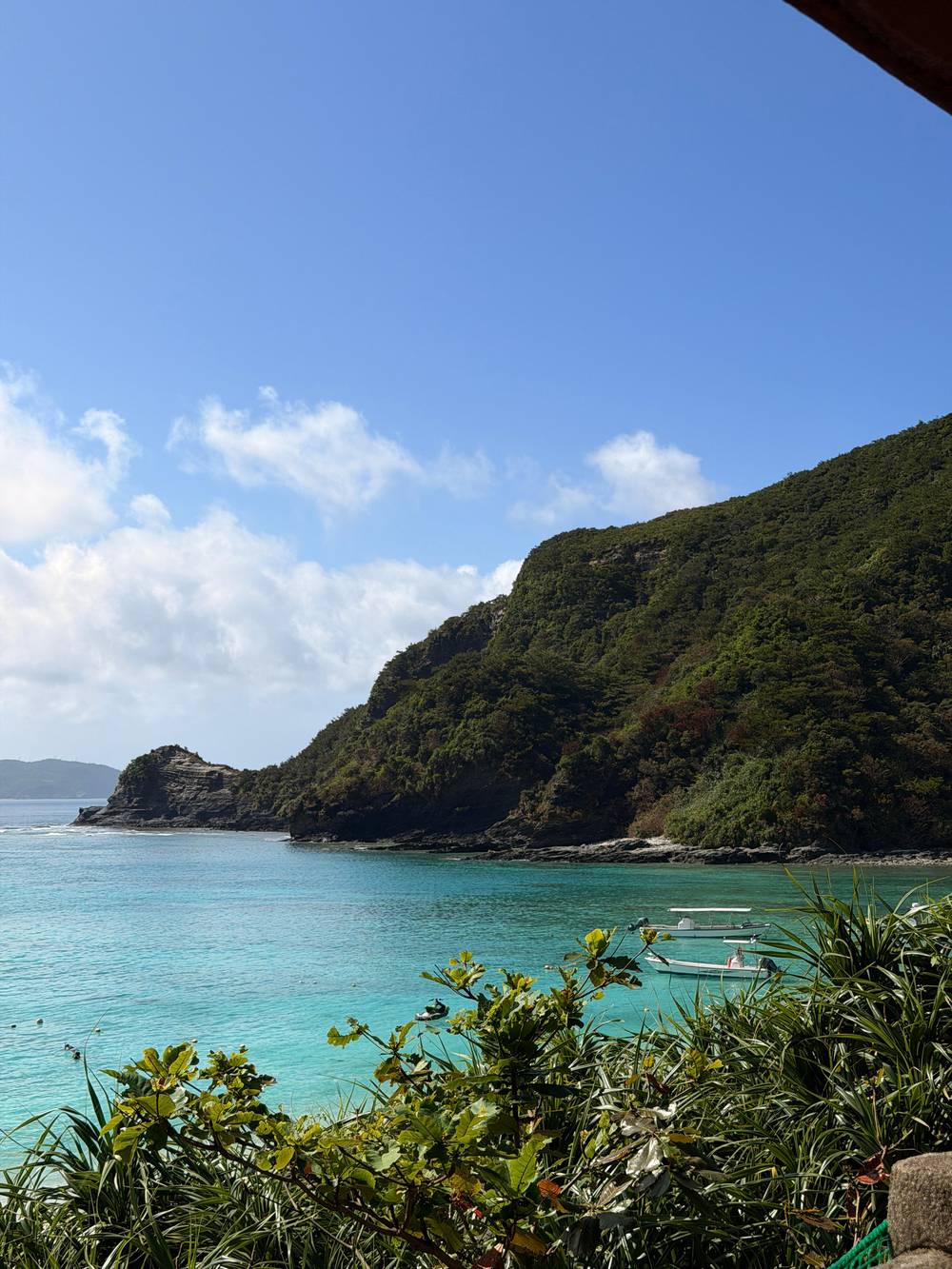
Sol and Travel Guides in English on YouTube · Video data is requested only when you tap play.
The waters around the islands of Tokashiki and Zamami, to the west of Okinawa's main island are known as a whale watching mecca.
Before you decide
Winter belongs to the whales on both islands. Visit Okinawa Japan says humpback whales are in the waters around the Kerama Islands from around January to April, and that the waters around Tokashiki and Zamami are known as a whale watching mecca.12,29 Tours depart from Naha and the Kerama Islands in January.28
For swimming, the shared season is mid-April to November on the beaches the bureau lists for Tokashiki.13 Typhoons occur most often in August, and the rainy season is typically mid-May to late June.15,14 The same weather decides both islands, and a day on either can be cancelled by waves.23,22
The calendar below sets the months out. If your dates fall in January to March, whales are the reason to go and the beach is secondary. If they fall in July or August, plan for heat, strong sun and a small typhoon risk, and book a flexible ticket.
Visit Okinawa Japan says Tokashiki accommodation is mostly laid-back guesthouses with a few premium resorts, and that a campsite near Aharen Beach has tents to rent.25 Tatazumi, a glamping facility there, has 2 rooms, a free shuttle from Tokashiki Port and Aharen Beach as a 1-minute walk away.37,38,39
On Zamami the bureau lists small guesthouses called minshuku, hostels and more upscale pensions, with both traditional Japanese and Western-style rooms.26 The stay page on this site covers the Tokashiki options in more detail.
Our pick, if you have a single day from Naha: Tokashiki, for the shorter crossing and an easy, packaged day with transfers and lunch from $62.1 If you have 2 or more days, or you want whales and a long beach walk, spend some of them on Zamami.
The public boats are priced by the village. From 1 October 2026 an adult pays 3,300 yen one-way on the Marine Liner Tokashiki and 2,200 yen on the car ferry, and adults over 16 add an environmental cooperation tax of 100 yen.40,41,42 The Zamami fares sit on the Zamami village ferry pages and are not repeated here.19
A package prices the day in a single figure. Our Tokashiki listing starts from $62 and includes the crossing, island shuttles and lunch. Full-day Kerama snorkeling listings start from $83 on a 7-hour high-speed boat day and from $51 on a 9-hour day with a boxed lunch.
Those are starting prices for one person and not the final amount. The listings that visit several islands include time at sea between snorkel stops, while ours puts you on one island for the day. Compare what you want to do with the hours each day gives you, then book the one that fits.
FAQ
The bureau says it is the longest beach there and extends for more than 800 meters.4
Visit Okinawa Japan calls them the best way around the hilly island, with a local bus to Ama and Furuzamami.6
Ferry Mitsushima links them from Aharen Fishing Port but must be booked 1 day ahead.36
Sources
Related guides
Planning a day on Tokashiki from Naha? A real person answers here.