Chart to play with
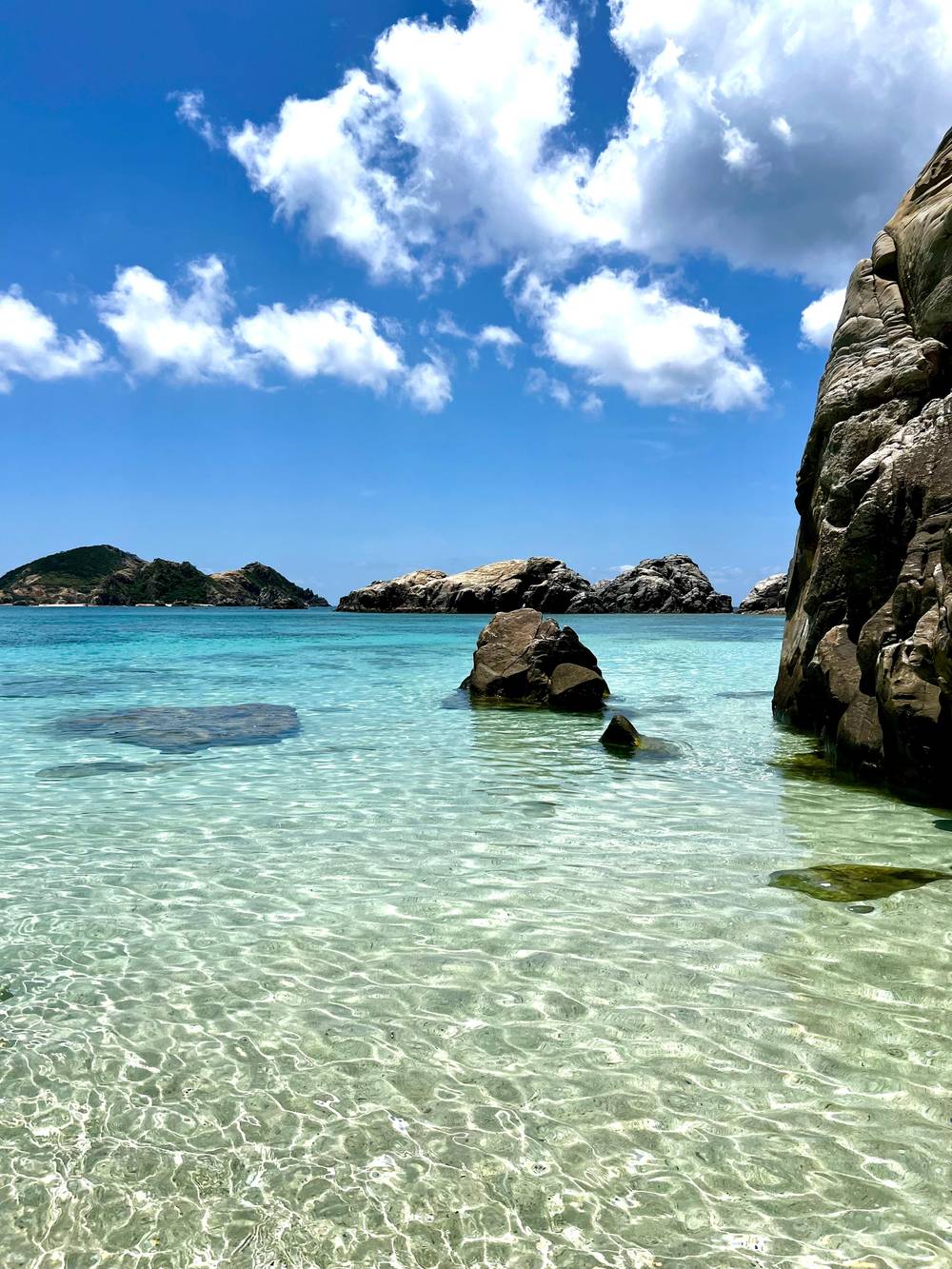
Tokashiki Island Kerama blue water: the seasons month by month
Twelve months of sea
The Kerama year at a glance
Choose a month to see sunset, day length and the usual warmth at Naha, with the season notes from the tourism bureau.
Sunset
Jun
The rainy season ends around late June.1
Sunset is worked out for the 15th of each month on Japan time. Day length is for Tokashiki and temperatures come from the NOAA station at Naha, 32 km away, 1991 to 2020.
The sea here is warm enough to swim from spring to autumn, and the real variables are rain, typhoons and waves. This page reads the Naha climate record and the official season notes to help you pick a month.
Editorial team, tokashikiislanddaytrip.com · Updated November 6, 2026 · Quick read: 6 min
In brief
- Sea temperatureIt runs from around 21 degrees Celsius in February to nearly 30 in August.1
- Beach seasonThe beaches list swimming from mid-April to November.2
- Rain and typhoonsThe rainy season is typically mid-May to late June, and typhoons are possible June to September.1
- WhalesHumpbacks are in the Kerama area from January to April.3
- WavesThe Marine Liner can be cancelled in waves above 3 meters.4
The year in one view
Our sources give no weather station on Tokashiki itself. This page leans on the NOAA record for Naha, 32 km away, and the official season notes from Visit Okinawa Japan.5 At Naha the average daily high is 19.7 °C in January and 31.7 °C in August, and the average daily low is 15.1 °C in January and 26.6 °C in August.5,5 The island sits in the same sea, but its own hills and exposure can differ from the city.
Visit Okinawa Japan describes the climate as humid subtropical, with the sea temperature running from around 21 degrees Celsius in February to nearly 30 in August, which makes marine activities possible all year.1 It puts the rainy season typically between mid-May and late June, with sudden showers that rarely last all day.1 Typhoons can strike between June and September.1
What the record cannot tell you is how the Kerama blue looks on a given day. Our sources describe the water as extremely clear, and as shallow well out from the beach, but they rank no month as the bluest.6 A reviewer of our day says that even on a not-so-beautiful day the island was still beautiful. Plan for conditions, and let the color be a bonus.
Winter, from December to February
Winter is cool, quiet and whale season. The Naha average daily high is 21.6 °C in December, 19.7 °C in January and 20.1 °C in February, with lows of 16.8 °C, 15.1 °C and 14.4 °C.5,5,5 Visit Okinawa Japan puts the January water at around 22 degrees Celsius and advises bringing or renting a wetsuit for watersports.10
Humpback whales come to the Kerama area in January to breed and rear their young, and they head back to northern seas in April.3 The bureau says tours depart from Naha and the Kerama Islands in January, with a high chance to see humpbacks.11 If you plan to take a whale tour, take motion sickness medicine before boarding.12
Winter is the off-season in Okinawa, and the bureau says beaches and resorts are less crowded, but some businesses keep shorter hours and some beaches may be closed.13 The village sign for Tokashiku gives its swimming surveillance as mid-April to 31 October and lists none outside that period.9 Treat a winter visit as a walking, viewing and whale-watching trip, and not a swim.
Naha station
Daylight and rain by month
- Jan13.3 h
- Feb12.7 h
- Mar12.0 h
- Apr11.2 h
- May10.6 h
- Jun10.2 h
- Jul10.4 h
- Aug10.9 h
- Sep11.7 h
- Oct12.4 h
- Nov13.1 h
- Dec13.5 h
The chart plots hours with no sun (mid-month) and days that get at least 2.5 mm of precipitation. Data: NOAA, station Naha, 1991 to 2020.5
Spring, from March to May
Spring warms quickly. The Naha average daily high climbs from 21.9 °C in March to 24.4 °C in April and 27.1 °C in May, and the lows from 16.9 °C to 19.3 °C and 21.8 °C.5,5,5 The beaches list a swimming season from mid-April, and the village sign gives mid-April for its start.2,9
The rains arrive in May. Naha records 243 mm of rain in May, with 10 days of at least 2.5 mm, and Visit Okinawa Japan dates the rainy season to mid-May to late June.5,1 March and April are drier, with 150 mm and 163 mm of rain and 9 and 8 wet days.5,5
Whales leave in April, so a late spring trip is a swimming trip.3 Golden Week, from the end of April to the beginning of May, is a crowded period, and the village says the ferries can become very crowded and that you might not get a boat without a reservation.16,17 Book a spring crossing early.
Pick your month
What should the sea give you?
Name what you want from the sea, and see which months fit.
If I want to swim in warm water
June to October
The sea runs to nearly 30 degrees Celsius in August and 27 in October.1,14
If I want whales
January to March
Humpbacks are in the waters from January to March around Okinawa.15
If I want fewer ferry crowds
The off-season
The bureau says beaches and resorts are less crowded in winter.13
If I want to avoid typhoons
April or May
Typhoons are possible from June through September.1
If I need flexibility
A free-cancellation listing
Our listing can be cancelled free until the day before.
Summer, from June to August
Summer is hot and bright. The Naha average daily high is 29.8 °C in June, 31.9 °C in July and 31.7 °C in August, with lows of 25.1 °C, 26.7 °C and 26.6 °C.5,5,5 Visit Okinawa Japan says August is the hottest month, with strong sun and high humidity, so sun protection and water matter.1 The sea reaches nearly 30 degrees Celsius.1
Rain peaks early in summer. June at Naha has 293 mm of rain and 10 wet days, and July drops to 187 mm and 7 wet days, while August has 247 mm and 10 wet days.5,5,5 The bureau says the rainy season ends around late June and that typhoons occur most often in August.1,8
Summer is the busiest season for the ferries. The village warns that the ferries can become very crowded in the summer season from June to October, and the Marine Liner adds a third sailing on Fridays, Saturdays and Sundays from July to September.16,7 Our listing adds an extra later departure from 12 July to 31 August.
The Kerama calendar
The year on Tokashiki, season by season
Jan to Apr
Humpback whales
Whales are in the Kerama waters from January to April.3
Mid-Apr
Beaches open
Swimming season opens on the beaches in mid-April.2
Mid-May
Rainy season starts
The rainy season runs mid-May to late June.1
Jul to Sep
Extra boats
The Marine Liner adds a third sailing on Fridays to Sundays.7
August
Most typhoons
Typhoons occur most often in August, and the sea is nearly 30 degrees Celsius.8,1
31 Oct
Lifeguards stop
The Tokashiku sign ends its swimming surveillance on 31 October.9
Autumn, from September to November
Autumn keeps the warmth. The Naha average daily high is 30.6 °C in September, 28.2 °C in October and 25.1 °C in November, with lows of 25.5 °C, 23.2 °C and 20.2 °C.5,5,5 Visit Okinawa Japan says the October water averages 27 degrees Celsius, still comfortable for snorkeling and swimming.14
Typhoons remain possible. The bureau says typhoons may occur in October, so check the forecast before making plans.20 Rain stays at 244 mm in September and 180 mm in October at Naha, with 9 and 7 wet days.5,5 The swimming season on the beaches ends in November, and the village sign for Tokashiku ends it on 31 October.2,9
October is a good month to look for a flexible plan. The weather is warm and the sea is comfortable, but the typhoon risk is not gone and the winter timetable starts on 1 October, with the car ferry's return moving to 15:30.20,21 Read the monthly PDF timetable before you book a late departure.22
Video
Summer in Okinawa, exploring the Kerama islands
Eryn Krouse on YouTube · Video data is requested only when you tap play.
The average sea temperature ranges from around 21 degrees Celsius in February to nearly 30 in August, making it possible to enjoy marine activities throughout the year.
Weather plan
A seasonal packing and planning list
Summer3
Winter3
Waves, typhoons and the ferry
For a boat trip, waves matter more than rain. The Marine Liner can be cancelled when waves are more than 3 meters, and the car ferry when they are more than 4 meters, and the village updates sailing information at 8:00 every morning.4,18 Departure and arrival times can also move with local events or sea conditions.23
Our listing says the tour may change or be cancelled because of sea conditions and that rain alone is not a reason. It allows free cancellation until a day before the start, and a different listing says guests are notified by email by 08:30 on the day when the ferry is cancelled or high waves make the sea unsafe.
If the village cancels a service, refunds are available, and reservations for suspended services are cancelled automatically.24,19 Leave a spare day around any trip that matters, and avoid tying the day to a flight on the same evening. In typhoon months, check the forecast before you commit.
Which month to choose
For swimming and snorkeling, aim for the beach season. The bureau and the village agree that it opens in mid-April and runs to October or November, and the water is about 27 degrees Celsius in October and nearly 30 in August.2,9,14,1 Early summer brings rain, and late summer brings typhoon risk, so shoulder months are a sensible compromise.
For whales, choose January to March, and wear warm, waterproof clothing, as the sea wind is cold in winter, even in Okinawa.15 The Naha average daily high is 19.7 °C in January and 21.9 °C in March, so bring a layer.5,5
For a first visit with a package booking, a warm, dry-ish month such as April or October balances heat, sea and ferry crowding, but there is no perfect month. Our listing is free to cancel until the day before, which helps with a changing forecast. Book flexibly and choose a month you can move.
FAQ
The short answers to your questions.
When should I visit Tokashiki?
How warm is the sea?
It is coolest in February and warmest in August, says Visit Okinawa Japan.1
When do the whales come?
Humpbacks reach the Kerama area in January and return to northern seas in April.3
When are typhoons most likely?
When is the rainy season?
Visit Okinawa Japan says sudden showers are common but it rarely rains all day.1
Does rain cancel the tour?
Our listing says rain alone is not a reason, but sea conditions can change or cancel the day.
Sources
- Visit Okinawa Japan (Okinawa Convention & Visitors Bureau) · When to Visit: Okinawa Climate & Seasons ↩
- Visit Okinawa Japan (Okinawa Convention & Visitors Bureau) · Aharen Beach ↩
- Visit Okinawa Japan (Okinawa Convention & Visitors Bureau) · Tokashiki Island ↩
- Tokashiki Village (official site) · English Information for Visitors ↩
- NOAA · Global Summary of the Month, Station Naha (NOAA GHCN JA000047936), 1991 to 2020 ↩
- Visit Okinawa Japan (Okinawa Convention & Visitors Bureau) · Okinawa Snorkeling Guide ↩
- Tokashiki Village (official site) · English Information for Visitors ↩
- Visit Okinawa Japan (Okinawa Convention & Visitors Bureau) · Okinawa in August ↩
- Tokashiki Village (beach sign, PDF) · Tokashiku Beach: A Request for Beachgoers ↩
- Visit Okinawa Japan (Okinawa Convention & Visitors Bureau) · Okinawa in January ↩
- Visit Okinawa Japan (Okinawa Convention & Visitors Bureau) · Okinawa in January ↩
- Visit Okinawa Japan (Okinawa Convention & Visitors Bureau) · Your Guide to Whale Watching in Okinawa ↩
- Visit Okinawa Japan (Okinawa Convention & Visitors Bureau) · Okinawa in January ↩
- Visit Okinawa Japan (Okinawa Convention & Visitors Bureau) · Okinawa in October ↩
- Visit Okinawa Japan (Okinawa Convention & Visitors Bureau) · Your Guide to Whale Watching in Okinawa ↩
- Tokashiki Village (official site) · English Information for Visitors ↩
- Tokashiki Village (official site) · English Information for Visitors ↩
- Tokashiki Village (official site) · English Information for Visitors ↩
- Tokashiki Village (official site) · English Information for Visitors ↩
- Visit Okinawa Japan (Okinawa Convention & Visitors Bureau) · Okinawa in October ↩
- Tokashiki Village (official site) · English Information for Visitors ↩
- Tokashiki Village (official site) · English Information for Visitors ↩
- Okinawa public transport council (kotsu-okinawa.org) · Ferry Information ↩
- Tokashiki Village (official site) · English Information for Visitors ↩
Related guides